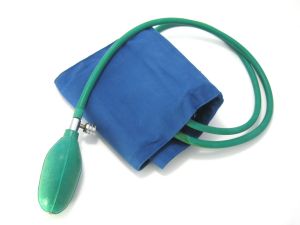
Common blood pressure medications called ACE (angiotensin converting enzyme) inhibitors or ARBs (angiotensin receptor blockers) could -- potentially -- have some benefit in treating PTSD, according to a new study.
This is just the first stage of testing these medications for PTSD, though. It was not a clinical trial, so take this news with a grain of salt. (Unless you're on salt restrictions because of high blood pressure.)
As for this study, the authors took a population sample of 5,000 low-income people in Atlanta, 505 of whom had been exposed to some traumatic event. Of those 505 people, 180 met the criteria for PTSD. Out of the total sample of 5,000 people, 98 were taking ACEs or ARBs, 26 of whom had PTSD. Those 26 people reported having fewer PTSD-related symptoms, including hyperarousal, avoidance/numbing, and intrusive thoughts.
Further study will be required.
While it's waaaaay too early to say that taking these medications can reduce PTSD symptoms, it's probably worth noting that it's important to check your blood pressure. Stress and anxiety can raise blood pressure levels, which can have further health effects.
Read more:
Can Blood Pressure Meds Lessen PTSD Symptoms? | Psych Central News
Showing posts with label anxiety. Show all posts
Thursday, May 3, 2012
Tuesday, March 20, 2012
Walmart therapy?
Going to Walmart can be pretty scary under the best of situations, but what if you also have PTSD?
The Pentagon is apparently telling vets with PTSD that one way they can confront and overcome their anxieties is to go visit Walmart stores and other big-box retailers that are "often busy and noisy, and some people may be hidden behind things — and all those are perceived as dangerous," according to a recent story from Bloomberg News.
What do you think? Do Walmart's low, low prices offer a way to lower PTSD symptoms?
Read more:
Pentagon tries Walmart therapy to help traumatized troops
Labels:
anxiety,
post-traumatic stress disorder,
ptsd
Monday, January 23, 2012
Crochet as PTSD therapy?
Knit one, heal two?
Crochet is hardly the most macho hobby in the world, but maybe that's why it can actually be a good activity for people with PTSD. An article on Crochet Concupiscence calls crochet "a form of self-kindness," saying its slow pace can help put you into a meditative state that will in turn reduce anxiety and the severity of flashbacks.
Read on:
Crochet Is Healing … Even for People With PTSD
Labels:
anxiety,
art therapy,
flashbacks,
meditation,
therapy
Tuesday, July 12, 2011
Cyber-stalking can cause PTSD
A new study entitled "Cyberstalking in the United Kingdom" finds that the trauma of being victimized online can lead to PTSD:
"The results indicate that the prevalence of PTSD following cyber-stalking exceeds the occurrence in a general population following trauma and is comparable to other extreme specific traumatic events such as sexual assault and combat ... the victims' reactions are of a negative nature and include fear, stress, anxiety, as well as an erosion of trust in the self and other people."
The Register has a brief article about the report here: 'Being cyber-stalked is as bad as being raped, or in a war'
Tuesday, July 5, 2011
Study: Aerobic exercise potentially good treatment for PTSD
Preliminary results of a small study suggest that adding aerobic exercise to other PTSD treatment can have a good effect.
The study, presented at the 2nd World Congress on Exercise is Medicine, examined 14 women recruited from a rape crisis center in Florida. According to a press release about the study, "All participants attended bi-weekly cognitive behavioral therapy sessions, and seven of the participants also attended a minimum of two group circuit training classes per week."
Results were good enough that the authors are now calling for more study.
Read more: Exercise Should Be Considered For PTSD Therapy
Monday, June 27, 2011
Fearless Journalism: How Violent Sex Helped Ease My PTSD
http://www.good.is/post/how-violent-sex-helped-ease-my-ptsd/Journalist Mac McClelland covers the human rights beat for Mother Jones magazine, and the experiences of her profession led to her developing PTSD. Here's her account, for Good magazine, about how it affected her. It's fearless journalism, and not easy to read, but well worth your time:
How Violent Sex Helped Ease My PTSD
Labels:
abuse,
anger,
anxiety,
dissociation,
journalism,
nightmares,
post-traumatic stress disorder,
ptsd,
rape,
sexual abuse,
sexual assault,
sexuality,
violence,
yoga
Wednesday, June 1, 2011
Another hidden cost of war: 18 U.S. vets commit suicide every day
Mother Jones pointed out yesterday that American casualties during war are way down compared to previous wars.
But that ignores the fact that our soldiers are surviving the battlefield, then coming home and committing suicide. More than 18 of them every day, on average. Read more:
Veteran suicides exceed combat deaths: 18 per day
But that ignores the fact that our soldiers are surviving the battlefield, then coming home and committing suicide. More than 18 of them every day, on average. Read more:
Veteran suicides exceed combat deaths: 18 per day
Labels:
anxiety,
combat,
depression,
post-traumatic stress disorder,
ptsd,
suicide,
veterans
Saturday, May 14, 2011
Respiration, CO2 and PTSD
A new study entitled "The effects of CO2 inhalation in patients with chronic post-traumatic stress disorder (PTSD)", published in the journal European Psychiatry, examines the link between the "psychometric effects of CO2 on panic anxiety and PTSD symptoms in subjects with PTSD."
I can't access the entire paper, but there is previous research linking getting too much carbon dioxide (and at the same time not getting enough oxygen) with anxiety disorders (especially in children).
What does all of this suggest? Nothing conclusive.
But it does lead us to remember one key word:
BREATHE.
Labels:
anxiety,
post-traumatic stress disorder,
ptsd,
research
Wednesday, April 20, 2011
Veterans' agencies launch free PTSD Coach iPhone app
Got PTSD? There's an app for that.
Okay, now that I got that awful joke out of my head, here's the news: The Department of Veterans Affairs and the Department of Defense have teamed up to launch a free iPhone app called PTSD Coach. Intended specifically for people who are in or have served in the military, the app "provides users with education about PTSD, information about professional care, a self-assessment for PTSD, opportunities to find support, and tools that can help users manage the stresses of daily life with PTSD."
You can find more info on the app here.
Monday, January 31, 2011
Prison, corrections staff & PTSD
I wouldn't want to work in a prison. Would you? Talk about a stressful job. In fact, working as a corrections officer is so stressful that some people come down with PTSD just from doing their jobs.
In fact, according to a nationwide survey, 39% of corrections workers met the criteria for having PTSD, while another 15-20% showed signs of being at risk of PTSD.
The PTSD risk comes from seeing violence, having violence committed against you, and the constant fear ("prolonged exposure") of what could happen next.
From a report on the study: "Of the 720 anonymous corrections employees from across the country who took part in the survey, 99.9 percent had witnessed violence at work, and almost 56 percent experienced one or more physical assaults."
Read more here:
Desert Waters looks at PTSD in corrections staff
Labels:
anxiety,
bullying,
cops,
depression,
post-traumatic stress disorder,
ptsd,
research,
violence
Wednesday, January 26, 2011
Could bartenders help diagnose depression and PTSD?
The old saw is that your local bartender will listen to your problems when nobody else will.
But what if they could do more than listen to your problems? What if they could provide answers?
That's the idea behind a new study published in the Journal of Military and Veterans' Health.
Let's go to the press release:
A pilot study suggests that some bartenders may be in a good position to identify veterans in need of mental health services and help connect them to the appropriate agency.
Researchers at Ohio State University surveyed 71 bartenders employed at Veterans of Foreign Wars posts in Ohio.
The results showed that bartenders felt very close to their customers and that these customers shared their problems freely with them, said Keith Anderson, lead author of the study and assistant professor of social work at Ohio State.
"Many of the bartenders said that their customers were very much like family," Anderson said.
"Given the closeness of the relationships, these bartenders are in a really great position to help these veterans – if they are given the right training and the right tools."
Of the bartenders surveyed, 73 percent said their role with their customers was "like family." And about 70 percent of the bartenders said that the veterans they interacted with "always" or "often" shared their problems with them.
Encouragingly, 80 percent of the bartenders said they would be willing to refer veterans to services at the U.S. Department of Veterans Affairs.
These results show why bartenders may be especially well-suited to help troubled veterans, Anderson said.
"We need to find the veterans where they are. Many of them may not be willing to go to a VA clinic to seek out help on their own. The VFW bartenders may be one of our best chances to reach some of these veterans," he said.
Part of this study looked into whether bartenders might already have the sensitivity to notice problems that others might not see:
About two-thirds of those surveyed rated their ability to recognize depression in their patrons as "moderate," while the remaining third rated their ability as "high."
Only 14 percent rated their ability to recognize symptoms of post-traumatic stress disorder as "high" while 43 percent rated their ability as low.
Two small quibbles: 1) We hope bartenders can be trained to tell trauma to stop drinking, and 2) younger vets simply aren't joining their local VFW or American Legion these days. But if you could take this further to all bartenders, it might help make them a very good resource for people who would otherwise be drowning their sorrows.
Read the whole release about this pilot study here:
Bartenders may have role in assisting troubled war veterans
Labels:
addiction,
alcohol,
anxiety,
depression,
post-traumatic stress disorder,
ptsd,
research,
resources,
substance abuse,
veterans
Monday, January 24, 2011
Must-read: The Neuroscience of Fear and Loathing
What happens to your brain -- physically -- during moments of extreme stress and fear? Dario Dieguez, Jr, Ph.D. gives you the latest science:
The Neuroscience of Fear and Loathing
Labels:
anxiety,
brain,
neuroscience,
post-traumatic stress disorder,
ptsd,
research
Wednesday, January 19, 2011
Military's prescription drug policy criticized - especially for Seroquel
In the first part of an ongoing investigative series, news site Nextgov reports that the U.S. military's prescription drug policies puts its soldiers and its veterans at risk.
Many of these soldiers and veterans are on multiple anti-psychotics, which one doctor said is not necessary.
Most of the criticism comes down on the use of the anti-psychotic Seroquel, which the military allows to be prescribed as a sleep aid -- which is not one of the uses the FDA has approved for the drug.
Nextgov also spoke to Stan White, whose son Andrew suffered from PTSD and was prescribed multiple medications, but barely had access to talk therapy:
You can (and should) read Nextgov's entire report here:
Military's drug policy threatens troops' health, doctors say
"A June 2010 internal report from the Defense Department's Pharmacoeconomic Center at Fort Sam Houston in San Antonio showed that 213,972, or 20 percent of the 1.1 million active-duty troops surveyed, were taking some form of psychotropic drug: antidepressants, antipsychotics, sedative hypnotics, or other controlled substances."
Many of these soldiers and veterans are on multiple anti-psychotics, which one doctor said is not necessary.
Most of the criticism comes down on the use of the anti-psychotic Seroquel, which the military allows to be prescribed as a sleep aid -- which is not one of the uses the FDA has approved for the drug.
"Smith said he was "flabbergasted" that military doctors prescribed Seroquel as a sleep aid, as the Food and Drug Administration has not approved such a use and other drugs are more effective. Breggin agreed, calling Seroquel "very dangerous, expensive and not proven to be more beneficial than other drugs."
Jackson noted Seroquel has the addictive potential of opioids, such heroin."
Nextgov also spoke to Stan White, whose son Andrew suffered from PTSD and was prescribed multiple medications, but barely had access to talk therapy:
"White said Andrew was so befuddled by his drug cocktail, which included Klonopin, a benzodiazepine, and hydrocodone, an opiate, that his wife, Shirley, had to dole them out forAndrew. White said Seroquel did not diminish Andrew's nightmares at even such a high dosage.
While talk therapy is widely viewed as one of the most effective treatments for some mental health problems, including PTSD, White said Andrew had only a few such sessions, primarily with a local veterans' peer therapy group. It was not until the week Andrew died that a VA psychiatrist decided to begin intensive sessions with him."
You can (and should) read Nextgov's entire report here:
Military's drug policy threatens troops' health, doctors say
Labels:
addiction,
alcohol,
anti-psychotics,
anxiety,
depression,
drugs,
medication,
post-traumatic stress disorder,
prescription drugs,
ptsd,
seroquel
Wednesday, January 12, 2011
PTSD in Firefighters, First Responders & Other Rescuers
Two recent news stories highlight the oft-forgotten sufferers of PTSD: First responders, firefighters and other rescue workers.
First up, an NPR article about how the constant threat of working as a first responder or other rescue worker can build up until PTSD symptoms develop.
"Little by little, it just started to build, and then one day, the slideshow that was all these events started running in my head and I couldn't control it," Michael Ferrara told NPR. It all came to a head for him when a friend of his was killed while on duty.
According to NPR (itself covering a story from Outside magazine), PTSD often goes undiagnosed in these occupations because the men who fill these jobs do not like to admit when they are in emotional pain.
But better understanding of PTSD allows both managers and rescue workers to not only deal with their symptoms better, but to recognize them when they first show up.
An Ontario-based newspaper called Cottage Country Now also discusses how volunteer firefighters can be ill-equipped to deal with the trauma of their jobs. Part of this comes from constantly working with survivors -- or seeing those who did not survive. "You're seeing people on the worse day of their life; their house burnt down, they had a heart attack, something bad happened," researcher Brad Campbell told the paper. Campbell's study is one of the first major studies of PTSD in firefighters.
Labels:
9/11,
anxiety,
fire,
firefighters,
first responders,
hyper-vigilance,
hyperactivity,
post-traumatic stress disorder,
ptsd,
rescue workers,
research,
substance abuse
Tuesday, January 11, 2011
96% of 9/11 Survivors Suffer PTSD Symptoms
A survey of 3,271 evacuees of the World Trade Center found that almost all of them -- 95.6% -- had displayed at least one symptom of PTSD.
A full 15% of survivors tested positive for PTSD in the 2-3 years following 9/11.
"PTSD risk was greater among survivors who experienced serious life threat as defined by location in the towers, time of evacuation initiation, or dust cloud exposures," said the study's first author, Laura DiGrande, in a prepared release. "As one would expect, individuals who were exposed to several of the most troubling and life-threatening events during the disaster were at the greatest risk of PTSD."
The study found a few interesting statistics: lower-income survivors were more likely to develop PTSD, as were blacks and Hispanics. People whose employers were killed also seemed to develop PTSD at a greater rate.
Meanwhile, exactly what each of these survivors encountered seemed to affect their changes of developing PTSD. Some where injured, some saw "horror," others were caught in the dust cloud, some were on very high floors of the Twin Towers. Those who experienced more than one of these situations had significantly greater levels of PTSD, to the point where the authors could even come up with a mathematical formula for the risk of PTSD based on the number of factors the individuals encountered.
The study appears in the online edition of the American Journal of Epidemiology. The full paper is behind a subscription firewall, but you can read the abstract here.
Labels:
9/11,
anger,
anxiety,
diagnosis,
post-traumatic stress disorder,
ptsd,
research,
symptoms,
traumatic brain injury
Thursday, December 16, 2010
Aromatherapy, Yoga & PTSD
In addition to therapy and medications, there are numerous things people can do to help ease the symptoms from their PTSD. Learning to relax is vitally important, and two ways to help you relax are yoga and aromatherapy.
Over at the site SelfGrowth.com, certified aromatherapist Robin Barnette offers a few ideas on using aromatherapy to relax and reduce anxiety.
Smell has been said to be a tremendous gateway to memory and the right aromas really can help you get to a good place in your head. Check out here recommendations here.
How have aromatherapy, yoga or other techniques helped you? Feel free to share them in the comments.
Labels:
anxiety,
aromatherapy,
art therapy,
meditation,
memory,
post-traumatic stress disorder,
ptsd,
relaxation,
stress,
yoga
Thursday, December 2, 2010
Study: Crohn's Disease May Cause PTSD
I have a few friends with Crohn's disease -- the often-disabling inflammable bowel disorder -- so a new study really struck me.
The study followed 600 people in Switzerland with Crohn's disease for 18 months. A full 19% of these people were found to have the criteria for PTSD. And those people with both Crohn's and PTSD had the worst of both worlds -- they were 13 times more likely to have had their Crohn's symptoms get worse in that 18-month period, possibly due to hormonal and immune system responses.
Crohn's causes severe pain and constant diarrhea, leaving patients with a constant state of panic about their pending symptoms. This never-ending stress is what can trigger PTSD in some patients.
The doctors behind the study, which appeared Dec. 2 in the journal Frontline Gastroenterology, say that Crohn's can not be cured, but PTSD can -- not necessarily true, but it is more treatable -- so treating the two conditions together could help reduce the symptoms from Crohn's disease.
Read more here:
Study Suggests Link Between Crohn's Disease and PTSD
Monday, November 22, 2010
University of Connecticut Tries New Approach to Educating Vets with PTSD
This is one of the most interesting and in-depth articles about the troubles vets with PTSD have re-integrating into society that we've seen in a while. Take this passage about one vet who tried to start taking classes:
The study will put half of the participants through "traditional" therapy ("prolonged exposure" therapy, which we haven't actually heard as having many good results), while the rest will be taught techniques to increase skills for controlling anger and other emotions.
Click the link above to read more.
Looking to continue the physical discipline of the Army, Matt enrolled in a six-month program to become a personal trainer. However, his conduct in the classroom caused his classmates to recoil and ultimately keep their distance. He repeatedly buttonholed them to listen to his ravings and tales from Iraq. He screamed at the television when an Arabic speaker came on and jumped when someone dropped a pan in the training school’s pantry.To help better understand how to offer education to people with PTSD, the University of Connecticut is studying a new technique called Trauma Affect Regulation: Guide for Education and Therapy (TARGET). The two-year study will be funded by a $750,000 grant from from the U.S. Justice Department, and the school is seeking 90 male vets to participate.
He was a stocky, sinewy soldier, with a martial arts Ultimate- Fighting-Championship build, who always donned the same GI-Joe cartoon T-shirt and stocking hat. He had a brooding and sullen stare and remarked, incessantly and uncontrollably, on the stressors of his war experience as his one and only life experience. His classmates gave him the nickname “McMurphy” after Jack Nicholson’s iconoclastic, charismatic mental patient in One Flew Over the Cuckoo’s Nest.
“Those guys on the side of the road with the cardboard signs — I can see how they get there,” Matt says. “I’m afraid of losing everything I came home to.” The 35-year-old soldier bitterly calls himself a poster child for PTSD.
The study will put half of the participants through "traditional" therapy ("prolonged exposure" therapy, which we haven't actually heard as having many good results), while the rest will be taught techniques to increase skills for controlling anger and other emotions.
Click the link above to read more.
Labels:
alcohol,
anger,
anxiety,
depression,
education,
experimental treatment,
fear,
flahbacks,
post-traumatic stress disorder,
ptsd,
therapy,
treatment
Friday, November 19, 2010
PTSD linked to hardened arteries, heart disease, death
Stress kills, and post-traumatic stress disorder is no exception.
According to research presented earlier this week at the annual meeting of the American Heart Association, men and women with PTSD have more calcium buildup in their arteries than people without PTSD. According to a report from CNN's Health.com, "Calcium buildup is a hallmark of atherosclerosis (also known as hardening of the arteries), which can lead to heart attacks."
The veterans who did have this calcium buildup were "48 percent more likely to die of any cause during the study and 41 percent more likely to die from heart disease compared to those without PTSD," the study found.
The study was conducted on 637 veterans, and was part of a broader 10-year study that examined 286,000 mostly male vets from conflicts dating as far back as the Korean War. It did not look at non-veterans who might also have been suffering from PTSD.
What causes this calcium buildup? That's still unclear, but the scientists behind the new study said stress could be one factor. Another factor could be not getting enough exercise or other "unhealthy behaviors."
As a conference presentation, this study has not yet been peer-reviewed.
Labels:
anxiety,
blood pressure,
post-traumatic stress disorder,
ptsd,
research,
stress,
symptoms
Tuesday, November 16, 2010
Lethal Warriors: New Book Examines How PTSD Turned Veterans Violent
The Atlantic magazine has an excellent review/essay about the new book Lethal Warriors, about how PTSD can make soldiers self-destruct and turn violent.
You can find out more about the book itself here:
Labels:
anger,
anxiety,
domestic violence,
post-traumatic stress disorder,
ptsd,
unemployment,
veterans,
violence,
war
Subscribe to:
Posts (Atom)


